
Freeze Credit After a Data Breach: When It Makes Sense
Introduction
A data breach notice can make you feel exposed.
One day, everything seems normal. Then you receive an email, letter, or alert saying your personal information may have been involved in a breach.
Maybe it was your name. Maybe your address. Maybe your date of birth. Maybe your Social Security number or other sensitive information.
That is when the question hits:
Should I freeze my credit after a data breach?
The practical answer is this:
Yes, freezing your credit after a data breach can be a smart move, especially if sensitive information like your Social Security number may have been exposed.
A credit freeze helps stop criminals from opening new credit accounts in your name. It does not fix the breach. It does not stop every type of fraud. But it does add a strong layer of protection against new credit account fraud.
The important thing is knowing when a freeze makes sense, what it protects, what it does not protect, and what steps to take after your information may have been exposed.
If your information was exposed in a data breach, understanding exactly how your credit report works is the first step to protecting yourself. Your Score by Anthony Davenport is the most practical guide I have found on taking full control of your credit written in plain English with no jargon.
What Does It Mean to Freeze Credit After a Data Breach?
Freezing your credit means placing a security freeze on your credit reports.
When a freeze is active, most lenders cannot access your credit report to approve new credit applications. Since lenders usually need to check your credit before approving a new account, a freeze makes it much harder for someone to open credit in your name.
That matters after a data breach because criminals may use stolen personal details to try to apply for:
- Credit cards
- Personal loans
- Store credit accounts
- Auto financing
- Buy-now-pay-later accounts
- Other new credit products
A credit freeze helps block that kind of fraud.
It does not mean your credit score is damaged. It does not mean your existing credit cards stop working. It does not mean you can never apply for credit again.
It simply locks access to your credit report until you lift the freeze.
If your main concern is score impact, read how to freeze your credit without hurting your credit score.
When Should You Freeze Your Credit After a Data Breach?
You should strongly consider freezing your credit if the breach may have exposed sensitive personal information.
This includes:
- Social Security number
- Full legal name
- Date of birth
- Current or previous address
- Driver’s license number
- Financial account information
- Tax identification details
- Login details connected to financial accounts
Not all breaches carry the same level of risk.
If only your email address was exposed, you may need to focus more on password security and phishing protection.
But if your Social Security number or other identity details were exposed, freezing your credit is a much stronger response.
A simple rule:
If the exposed information could be used to apply for credit in your name, freeze your credit.
Do not wait until fraud appears.
By then, you are already cleaning up damage.
Why Waiting Can Be a Mistake
Many people wait because they think:
- “Nothing has happened yet.”
- “Maybe my information was not used.”
- “I will freeze later if I see suspicious activity.”
- “The company offered credit monitoring, so I’m fine.”
That thinking is weak.
Credit monitoring can alert you after suspicious activity appears. A freeze can help stop some fraudulent applications before they become new accounts.
Monitoring is useful, but it is reactive.
A freeze is preventive.
If your sensitive information is already exposed, waiting gives criminals more time.
A better approach is:
- Freeze your credit now.
- Monitor your accounts.
- Lift the freeze temporarily only when you apply for credit.
That is cleaner and safer.
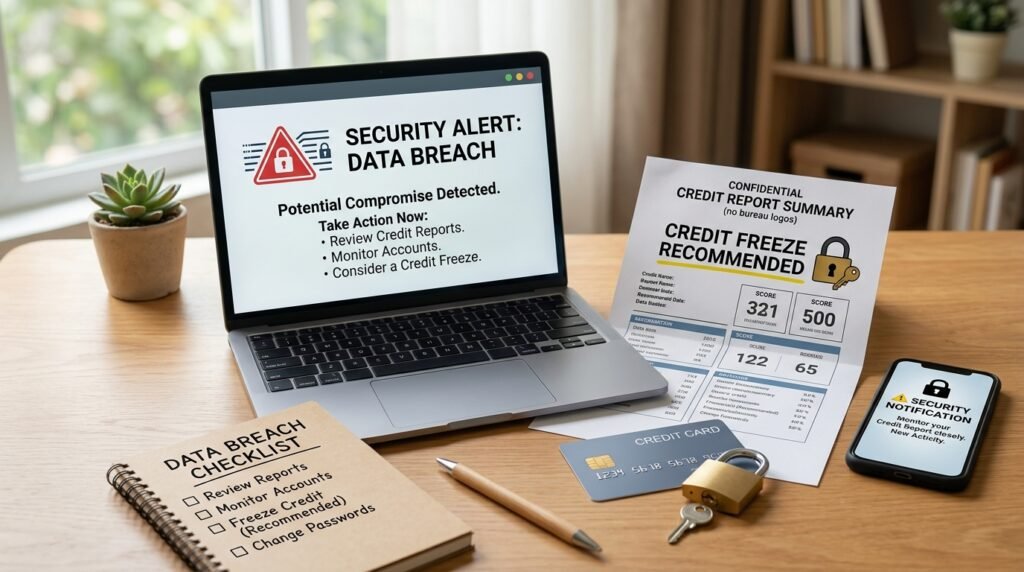
Does a Credit Freeze Stop All Data Breach Fraud?
No. This is where people get confused.
A credit freeze helps protect against new credit account fraud.
It does not stop every type of identity theft.
A credit freeze may not stop:
- Fraudulent charges on existing credit cards
- Bank account takeover
- Tax refund fraud
- Medical identity theft
- Email account hacking
- Phone account fraud
- Phishing attempts
- Password attacks
- Debit card fraud
- Scams using your personal information
That is why freezing your credit is only one step.
After a data breach, you also need to:
- Change passwords
- Turn on two-factor authentication
- Monitor bank accounts
- Check credit card transactions
- Watch for strange mail
- Review credit reports
- Be alert for phishing emails and texts
A credit freeze is strong, but it is not complete protection by itself.
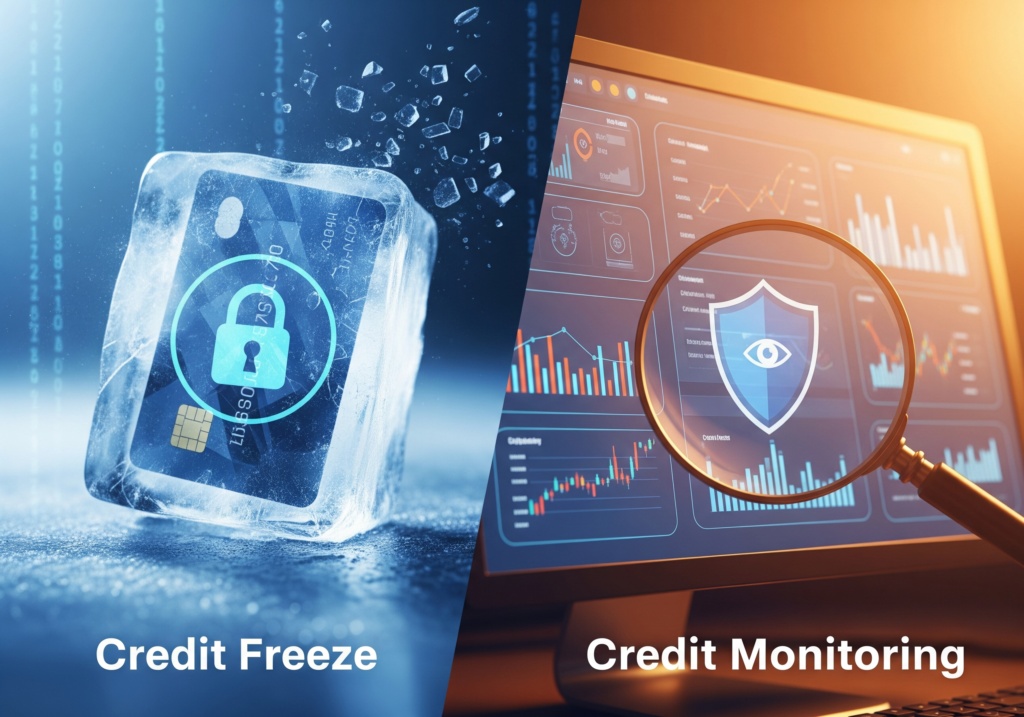
Credit Freeze vs Credit Monitoring After a Data Breach
Many companies offer free credit monitoring after a breach.
That sounds good, but you need to understand the difference.
Credit Monitoring
Credit monitoring alerts you when certain changes appear on your credit report.
It may notify you about:
- New accounts
- Credit inquiries
- Balance changes
- Address changes
- Suspicious activity
Monitoring is useful, but it usually tells you after something happens.
Credit Freeze
A credit freeze restricts access to your credit report.
It helps prevent new accounts from being opened in your name.
That means monitoring and freezing serve different roles.
A simple way to think about it:
Credit monitoring is an alarm. A credit freeze is a lock.
The best approach after a serious breach may be to use both.
Should You Use a Fraud Alert Instead?
A fraud alert tells creditors to take extra steps to verify your identity before opening new credit.
It can help if you suspect identity theft or want a lighter layer of protection.
But a fraud alert is not the same as a freeze.
A fraud alert says:
“Be careful before approving credit.”
A credit freeze says:
“Do not access this report unless I lift the freeze.”
If your Social Security number was exposed, a freeze is usually stronger.
A fraud alert may be useful if:
- You want extra caution
- You are actively applying for credit soon
- You do not want to freeze and unfreeze reports
- You suspect identity theft but need flexibility
But if your goal is maximum protection against new credit fraud, freezing your credit is usually the stronger tool.
How to Freeze Your Credit After a Data Breach
You must freeze your credit separately with all three major credit bureaus.
Freezing only one is not enough.
The three major bureaus are:
- Equifax
- Experian
- TransUnion
Here is the practical process.
Step 1: Gather Your Information
You may need:
- Full name
- Date of birth
- Social Security number
- Current address
- Previous address
- Phone number
- Email address
- Identity verification answers
Step 2: Freeze Equifax
Go to Equifax’s official credit freeze page and follow the process.
Step 3: Freeze Experian
Go to Experian’s official credit freeze page and follow the process.
Step 4: Freeze TransUnion
Go to TransUnion’s official credit freeze page and follow the process.
Step 5: Save Your Login Details
This is critical.
You will need access later if you want to lift the freeze.
Use a secure password manager or write the information somewhere safe.
Step 6: Confirm All Three Freezes
Do not stop after one bureau.
Create a checklist:
- Equifax frozen
- Experian frozen
- TransUnion frozen
All three matter.
What to Do Immediately After Freezing Your Credit
Freezing your credit is not the end.
After a breach, take these steps.
1. Change Important Passwords
Start with:
- Bank accounts
- Credit card accounts
- Investment accounts
- Mobile money or payment apps
- Shopping accounts
- Password manager
- Phone provider account
Your email is especially important because it often controls password resets.
2. Turn On Two-Factor Authentication
Use two-factor authentication on financial accounts, email, and important apps.
Authenticator apps are usually stronger than SMS codes, but SMS is still better than nothing.
3. Review Your Bank and Credit Card Transactions
Look for:
- Small test charges
- Unknown merchants
- Duplicate charges
- Withdrawals you did not make
- Subscriptions you did not authorize
Report suspicious activity quickly.
4. Check Your Credit Reports
Look for:
- Accounts you do not recognize
- Hard inquiries you did not authorize
- Address changes
- Names you do not use
- Incorrect balances
- Collection accounts
5. Watch Your Mail
Be alert for:
- Credit cards you did not request
- Loan approval letters
- Debt collection notices
- Account change notices
- IRS or tax-related letters
- Medical bills you do not recognize
Fraud does not only happen online.
Will Freezing Your Credit Affect Existing Credit Cards?
No.
You can still use your existing credit cards after a freeze.
A freeze does not close existing accounts. It does not stop you from making purchases. It does not prevent you from paying your bills.
It mainly affects new credit applications.
That means you can still:
- Use your current cards
- Pay your balances
- Keep old accounts open
- Receive statements
- Build payment history
- Monitor account activity
If you are managing no-fee cards, read what happens if I never use my no annual fee credit card.
How to Apply for Credit After Freezing Your Reports
If you need to apply for a credit card, loan, apartment, or financing after freezing your credit, you need to temporarily lift the freeze.
The process is simple:
- Ask the lender which bureau they check.
- Log in to that bureau’s credit freeze page.
- Choose a temporary lift.
- Set the lift for a short date range.
- Submit your application.
- Let the freeze return automatically.
If the lender does not know which bureau they will use, temporarily lift all three.
Do not permanently remove the freeze unless you have a strong reason.
A temporary lift is safer.
Practical Example: Data Breach With Social Security Number Exposed
Imagine you receive a letter saying your name, address, date of birth, and Social Security number may have been exposed.
This is serious.
Your response should be:
- Freeze Equifax.
- Freeze Experian.
- Freeze TransUnion.
- Change your email and bank passwords.
- Turn on two-factor authentication.
- Review credit reports.
- Monitor bank and card accounts.
- Watch for suspicious mail.
- Consider a fraud alert if you suspect active misuse.
- Keep your freezes in place until you need to apply for credit.
That is a strong response.
Waiting for fraud to appear first is weaker.
Practical Example: Data Breach With Only Email Exposed
Now imagine only your email address was exposed.
A credit freeze may still be an option, but your immediate priority is different.
You should:
- Change your email password.
- Turn on two-factor authentication.
- Watch for phishing emails.
- Avoid clicking suspicious links.
- Check whether the same password was reused elsewhere.
- Update reused passwords.
- Consider freezing credit if you want extra protection.
If only an email address was exposed, the risk is often phishing and account takeover, not necessarily new credit fraud.
That is why the type of information exposed matters.
Common Mistakes After a Data Breach
Mistake 1: Assuming Credit Monitoring Is Enough
Monitoring alerts you. A freeze helps block new accounts.
Use monitoring if offered, but do not confuse it with prevention.
Mistake 2: Freezing Only One Bureau
This leaves gaps.
Freeze all three.
Mistake 3: Waiting Too Long
If sensitive information is exposed, freeze quickly.
Mistake 4: Forgetting Login Details
You need them later to lift the freeze.
Mistake 5: Ignoring Existing Accounts
A freeze does not stop fraud on accounts you already have.
Monitor them.
Mistake 6: Clicking Breach Notice Links Without Verifying
Scammers sometimes send fake breach emails.
Go directly to official websites instead of clicking suspicious links.
Mistake 7: Paying for a Freeze
Credit freezes are free.
Do not pay for something that should cost nothing.
Conclusion
If your personal information was exposed, freezing your credit after a data breach is one of the strongest free steps you can take.
It will not fix the breach. It will not stop every form of fraud. But it can help block criminals from opening new credit accounts in your name.
The smartest response is simple:
- Freeze Equifax
- Freeze Experian
- Freeze TransUnion
- Save your login details
- Monitor existing accounts
- Change important passwords
- Turn on two-factor authentication
- Temporarily lift the freeze only when you apply for credit
Do not wait until fraud appears.
If sensitive information may be exposed, act early. A credit freeze is not panic. It is prevention.
If your information was exposed in a data breach, understanding exactly how your credit report works is the first step to protecting yourself. Your Score by Anthony Davenport is the most practical guide I have found on taking full control of your credit written in plain English with no jargon.
Frequently Asked Questions
Should I freeze my credit after a data breach?
Yes. You should strongly consider freezing your credit after a data breach if sensitive information like your Social Security number, date of birth, address, or financial details may have been exposed. A credit freeze is one of the strongest steps you can take to prevent new accounts from being opened in your name.
Does freezing credit after a data breach hurt my credit score?
No. Freezing your credit does not hurt your credit score in any way. It only restricts access to your credit report for new credit applications — your payment history, utilization, and all other scoring factors remain completely unchanged.
Is credit monitoring enough after a data breach?
Credit monitoring is useful but it is not enough on its own. Monitoring typically alerts you after suspicious activity already appears on your report. A credit freeze is a stronger measure because it actively prevents new credit accounts from being opened in your name in the first place — rather than just notifying you after the fact.
Do I need to freeze all three credit bureaus?
Yes. You must freeze your credit separately at Equifax, Experian, and TransUnion. Freezing only one bureau leaves gaps because different lenders pull from different bureaus — and a fraudster only needs one unprotected bureau to open a new account in your name.
Can I still use my credit cards after freezing my credit?
Yes. A credit freeze has no effect on your existing credit cards, loans, or any accounts you already have open. You can continue using, paying, and managing all current accounts exactly as normal. The freeze only affects new credit applications.
How long should I keep my credit frozen after a breach?
You can keep your credit frozen indefinitely — there is no expiration date. Many people choose to keep their freezes permanently active and only lift them temporarily when applying for new credit. This is considered one of the strongest ongoing protections against identity theft.
What if I need to apply for a loan after freezing my credit?
Temporarily lift the freeze before you apply. Ask the lender which credit bureau they pull from, then lift the freeze at that specific bureau — or lift all three to be safe. You can set the lift for a specific time period and it will reactivate automatically once that window closes.

John F. Miller is a personal finance writer and the founder of MyCash Advice. He covers savings accounts, credit cards, budgeting strategies, and debt payoff methods. His mission is to make practical money advice accessible to everyone regardless of income level.